
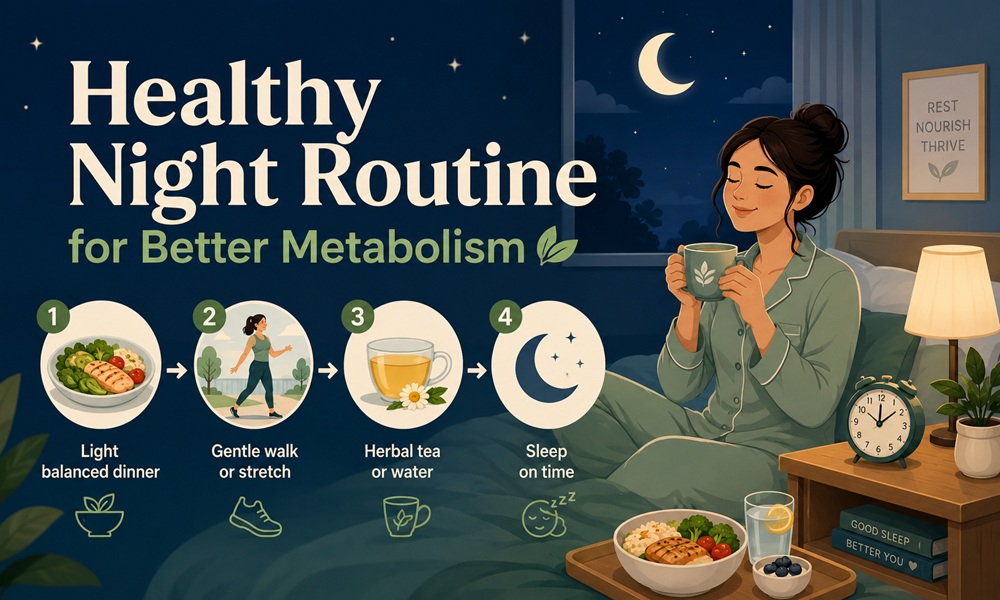

Metabolism is not only about what you eat — it is also about when. Your body processes food differently at night, as it winds down toward sleep and repair. A smarter evening routine works with that natural rhythm instead of against it. The science behind this is called chrononutrition, and it is reshaping how experts think about meal timing.
Eat dinner earlier and lighter, close the kitchen 2–3 hours before bed, favor protein, fiber and vegetables at night, and protect your sleep. Late, heavy eating works against your metabolism.
What the science says about late eating
In a controlled Johns Hopkins study, eating a late dinner (around 10 p.m.) versus a routine one (around 6 p.m.) raised the after-dinner glucose peak by about 18% and reduced the burning of dietary fat by roughly 10% overnight. Late eating also nudged hormones in a direction that favors fat storage. Larger studies link a habit of eating more calories later in the day with higher risks of weight gain and metabolic problems.
The mechanism makes sense once you picture it. As it gets dark, the hormone melatonin rises and insulin output naturally falls. Food eaten late therefore sits in a body that is shifting gears from “digest” to “rest and repair,” so it is handled less efficiently. This is why timing can matter even when the total calories are the same.
Your metabolism-friendly evening, step by step
| Time | Action | Why |
| ~6–7 p.m. | Eat your main meal earlier | Better glucose and fat handling |
| Dinner plate | Vegetables, protein and fiber; go lighter | Steady glucose and good fullness |
| 2–3 hrs before bed | Close the kitchen | Lets the body switch into repair mode |
| If still hungry | A small protein snack | Casein or whey is gentler than carbs late |
| Pre-sleep | Dim the lights and wind down | Sleep itself supports a healthy metabolism |
What to eat at night (and what to skip)
- Best at night: fiber-rich vegetables, legumes and some fruit — they give steady glucose absorption, minimize the post-meal spike, and keep you full with a low glycemic impact.
- If you need a late bite: a small protein serving, such as casein or whey, is a gentler choice than a sugary or starchy snack.
- Limit late: large, fatty or sugary meals, alcohol, and heavy carbohydrates close to bedtime.
Sleep is part of your metabolism
A good night routine is not only about food. Sleep regulates the very hormones that control hunger and fat storage, so short or poor sleep tilts you toward cravings and weight gain the next day. That means your wind-down — a cool, dark room and no late screens — is also metabolic care. Eating well in the evening and sleeping well reinforce each other.
A trend worth knowing: time-restricted eating
Many people now fit their meals into an 8–10 hour daytime window — for example, finishing dinner by early evening. The idea is to align eating with the part of the day when insulin sensitivity is highest, giving the digestive system a predictable nightly rest. A simple, sustainable version is to stop eating 2–3 hours before bed and keep your eating window consistent. The benefit comes from the consistency, not from suffering through hunger.
You may also see the popular “30-30-30” idea — around 30 g of protein plus light movement within 30 minutes of waking — paired with an early kitchen cut-off in the evening. Treat frameworks like these as flexible guides rather than strict rules; the underlying principle is simply to front-load your eating earlier in the day.
Frequently Asked Questions
Does eating late really slow metabolism?
Controlled studies show late dinners can raise overnight glucose and reduce fat burning compared with earlier meals, even at the same calorie intake. So timing matters alongside how much you eat.
How many hours before bed should I stop eating?
A practical, evidence-aligned target is 2–3 hours. This lets digestion settle and supports the body’s overnight shift into repair and rest.
Is a bedtime snack always bad?
No. If you are genuinely hungry, a small protein-based snack is reasonable and may even be gentler than going to bed very hungry. The issue is large, sugary or fatty late meals.
What is the best dinner for metabolism?
A lighter plate built around vegetables, fiber and lean or plant protein, eaten earlier in the evening, supports steady glucose and better overnight fat handling.




Leave a Comment